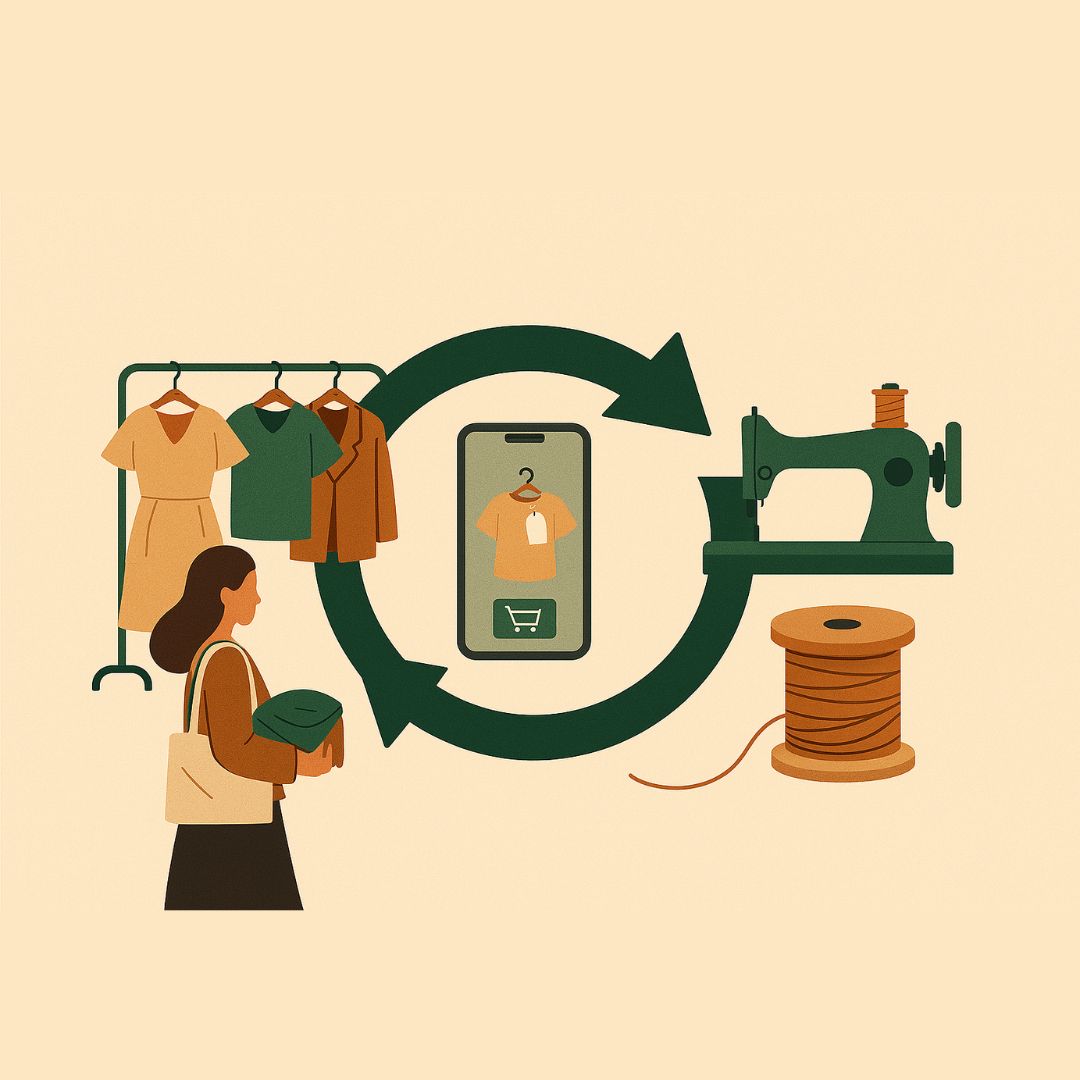
Following the transformation already underway in the automotive sector, the fashion and textile industry is experiencing its own shift toward servitization, a turning point for a field long characterised by fast turnover, intensive resource use, and a significant environmental footprint.
Today, the industry faces pressure to reduce textile waste, comply with EU sustainability requirements, and respond to consumers’ growing expectations for responsible, transparent products. Within this context, servitization is emerging as one of the most promising levers to accelerate the transition toward circularity.
In the analysis conducted within the FurnSERVICE project, fashion is among the sectors where servitization holds the greatest potential to counter linear consumption patterns. Just as automotive companies, fashion brands are beginning to provide access, care, upgrades, and second-life pathways instead of relying solely on new product sales.
The FurnSERVICE report highlights three business cases:
Spinnova (Finland). A pioneer in regenerative materials, its proprietary technology converts FSC-certified wood pulp, agricultural and textile waste into SPINNOVA®, a biodegradable, recyclable, and high-performance textile fiber that offers a sustainable alternative to cotton and synthetic fibers.
ClooV (Italy). A startup that supports fashion brands in transitioning from traditional sales to a circular economy model. Through a customizable digital platform, ClooV enables brands to integrate circular services, directly into their e-commerce.
Recover (Spain). Using proprietary technology that transforms post-industrial and post-consumer textile waste into new recycled cotton fibre, Recover™ has built a Regenerative Textile Platform, a scalable system that combines product innovation, a sustainable supply chain, and digital services for the entire fashion industry
Across these cases, the message that emerges is clear: circularity in fashion is no longer just about choosing sustainable materials, but about creating continuous, value‑adding services. To discover more about it, read the full report on current and emerging Circular Business Models in EU Industries.